


Cart
Buying a book using a Purchase Order
Click here and our sales team will contact you directly with pricing
local_shipping Free Standard Shipping on all orders $25+ and use Coupon Code FALL26 for an additional 15% off!

WorldCat is the world's largest library catalog, helping you find library materials online.
In a sweeping poetic achievement--and a clarion call to action--Newbery Honoree Marion Dane Bauer reckons with humankind's responsibility for the climate crisis, tracing a storyline from ice age to industrial age.
Born without fangs, claws, or wings, naked of fur or feathers, humans are the most vulnerable of Earth's creatures. Our strength rests in our knowing. Early on, we put our big brains to work to tame fire, and over eons, our discovery helped us grow. Just two centuries ago, we began using coal, oil, and gas--remnants of long-ago life hidden deep within a generous Earth--to fuel fire, light up our nights, and run machines.
Fertilizers let us reuse the soil. Pesticides killed the competition. We even dreamed up a synthetic "wonder" material called plastic. But our big brains tuned out the devastating effects of these actions. Can our knowing unravel the greatest crisis we'll ever face?
Stunning artwork evokes the climate emergency to scale in a third epic fusion of poetry and science from the author of We, the Curious Ones and The Stuff of Stars. Packed with hopeful action points, this portrait of a planet in peril is a plea to reconnect with our home, the source of all life, and a rallying cry for a generation coming of age just in time to turn things around.
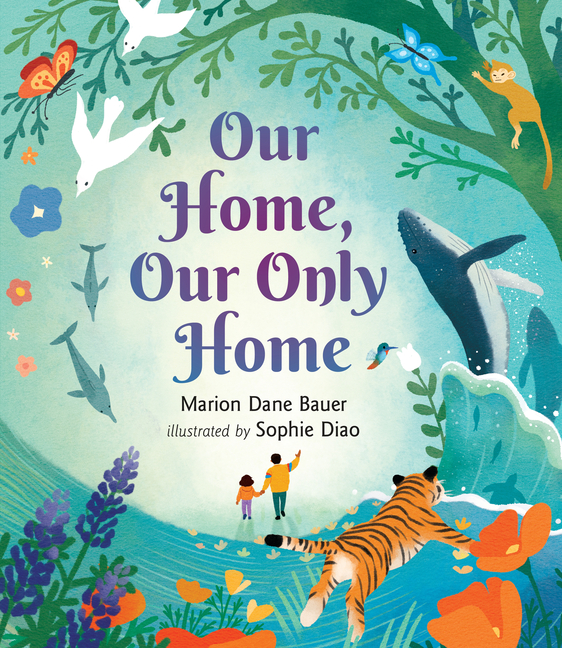
K-Gr 4--Bauer's free verse poetry tells the history of the Earth and humanity. Fire helped people survive but by its overuse destroyed parts of the earth. Pesticides and plastics seemed like miracles but ultimately added more damage. The poem discusses how the damage may lead to another great extinction due to human-caused climate change. It then shifts tone to show how humanity still has a chance to change things, but people have to care enough to try. Diao's full-page illustrations closely echo the tone of the poem, starting with bright, vibrant colors and then getting progressively darker as the ecological damage grows, and becoming brighter again when discussing ways to change. The overall effect stresses the severity of the situation, but ends on an optimistic and age-appropriate note. Several pages of back matter explain climate change in greater detail and give examples of young climate activists, such as Greta Thunberg. The book concludes with a few general ideas of what kids can do, such as picking up trash and conserving water. VERDICT Lyrical and sweeping poetry coupled with vivid artwork make this a worthy addition to the shelves of conservation books and a strong Earth Day pick in classrooms.--Jennifer Rothschild
Copyright 2026 School Library Journal, LLC Used with permission.Insistent verse by Bauer urges care for Earth as confident artwork from Diao emphasizes the planet's fragility in this bracing picture book wake-up call. Similes keenly draw out humankind's oneness with the natural world ("We are as alive, / as night-sprouting mushrooms, / as worms gobbling their way/ through the living soil") even as text simultaneously narrates a story of how humans, with their "big brains" and their "trusted companion./ Fire," have carelessly wrought destruction. The lines crescendo into an accounting of alarming consequences ("Wildfires kill./ Grasslands become desert./ Oceans die./ Plastics fill land and sea") before suggesting ways that people can still change course. There's a sandy tactile quality to soft-contoured digital renderings that aptly match the poem's cumulative tone, which darkens before eventually brightening. Includes extensive back matter. Ages 4-8. (Mar.)
Copyright 2025 Publishers Weekly, LLC Used with permission.


